Friday, June 7

Kindle Reads? Good Fire?

The post on Open City, and thinking a bit more about openness, insights and sharing lead to this little wish list. Namely, how I'd love for Amazon and Goodreads to play together - for my reading, sharing, exploring and remembering pleasure.

Idea 1: wish shelf

Having the option of syncing each wishlist with a shelf, so one for non fic want to read, one for general genre fic, and one for darker tales.

Ideally books bought would move to another shelf, or into the "to read" mode.

Idea 2: my good

kindle.amazon works like a charm for looking up highlights, and for quickly updating the status of purchased books. It should be opened up or merged into Goodreads. Perhaps in an IFTTT kind of way, opening up the API for other stores as well.

Idea 3: wish buy

Not really related to Goodreads directly, but I find it really hard to understand why Amazon at all times neglects my purchasing behavior and signaling intent by using wish lists. 9 of the last 10 books bought have spent time on my wish list prior to the sale.

Then it would make sense to use that list as a basis for recommendations  It works that way for the regular cart.

But Kindle books don't play nice with the cart. Which is in a way another minor gripe, as I often buy 2-3 at once; why separate check out and receipt mail, not to mention separate debits of my card?


Idea 4: good app

Reading with the Kobo app can be a lot of fun, because it binds together the social, the metrics and the reading. It is no big deal, but having charts like Runkeeper for books and pages read, quotes shared and discussed would be nice. And pushing it into Goodreads with an open API would make even more sense, since readers are a small niche to begin with, the more the merrier.

What would you like to see? #kindleGood ?

- ...and the sun was away as this got underway, a small evening shower on Monday (still doing that schedule thang, and loving it) - but still warm enough by far to sit outside on the balcony letting the thoughts flow ...

Thursday, June 6

The truth in fiction


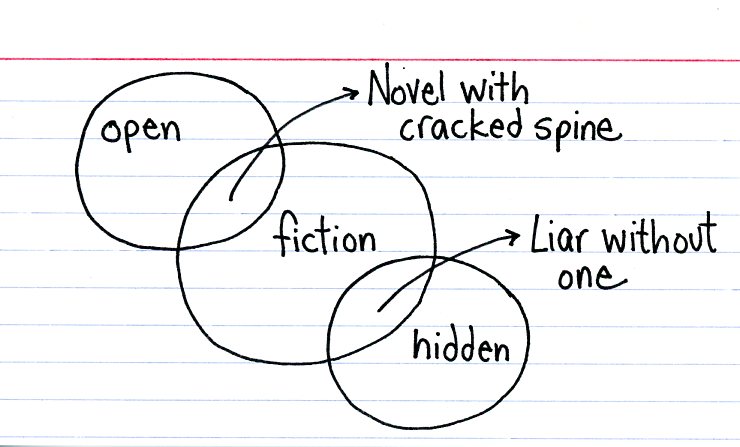
You can get a lot of truth from a made-up story.
Another great card / image from Indexed, a book tells a story openly, but perhaps the best insight we get from it is the story that plays out inside our head.

Spinning on the ideas the book delves into, or simply how it relates to our own stories.

Finished Open City by Tehu Cole on the balcony over the weekend, and one of the highlights is right in line with that same sentiment.

on to a bit of longer a side note, 

Open City was one of those books that made it's way onto my radar, then picked up kindle ed and read almost instantly - in less than a month in total. Which is high "praise" in this day of digital access and overview. 

At any given time my two main wish lists for kindle books hover at or around titles 20 each (non fic and genre respectively , with another 6-10 ongoing or waiting in line in the app, and a total of 40-50 in a more long term limbo of assorted niche list.

back to the story

Our narrator reflects on a meeting with his neighbour [SPOILER - ALBEIT SMALL], and learning that the wife has passed away.

I didn’t switch on the light. A woman had died in the room next to mine, she had died on the other side of the wall I was leaning against, and I had known nothing of it. I had known nothing in the weeks when her husband mourned, nothing when I had nodded to him in greeting with headphones in my ears, or when I had folded clothes in the laundry room while he used the washer. [location 291]

A feeling of both being so close, yet closed out at the same time. The city is open, But are we, the people living in it? How can we live within a few feet of each other, and yet hardly interact? How many of your ten or hundred closest do you know at all? A friendly nod? A name? Some story or context?


-...and the sun is making art outside as this is written, painting the clouds in shades of yellow, gold, orange, pink... it is summer at last, and fully

Wednesday, June 5

I want to do it all, and then some more


How do you decide?


Chances are there are more thing you want to do, than people to do it.
More ideas than project teams.
More bugs than developers, never mind testers.

Should you focus on those big things that "wake up the neighbors" - attract a lot of attention and flair, preferably within the niche or market you play in - or should you do a lot of smaller, unknown and unknowing tests? Build the future stepwise, or stay the course first and foremost?

How do we find a balance? 

Can we?
Should we even try?

One reason that incumbents are so often defeated by newcomers is that the incumbents put their best people and their urgent focus on the stuff they used to do (like winning Pulitzer prizes, selling ads to cosmetic companies and counting dead trees) while the new guys have nothing but the new thing to focus on.
[seth, who else?]


Are you doing it wrong if you do what you know, what makes sense right now, and what "everybody" else is doing? Is radicall innovation and transformation advisable, never mind possible? Is it right to say to your current customers "sorry, we want someone else, so you'll be getting an inferior product - but it will be a lot better in a while, albeit something completely different"?

Apple could do the iPhone because they didn't have a phone business, didn't have telco relations to maintain, and an upgrade path to stick to. 3g, 4, 4s, 5? Incremental wrapping and icing on the cake.

Apple could also do the iPad, because they had 10% or less market share for laptops. Microsoft couldn't for the same reason. They had too many partners to placate, making the assorted touch screen laptops never-rans.

Facebook bought Instagram. Even if they had the bigger volume of users. Even if they had apps and were THE photo destination. But they didn't have or get mobile. As a core. As the only thing. Do they now? At least a bit more than before the 1 bn.

Just right, just so?


Tuesday, June 4

Not what I expected - but summer reading


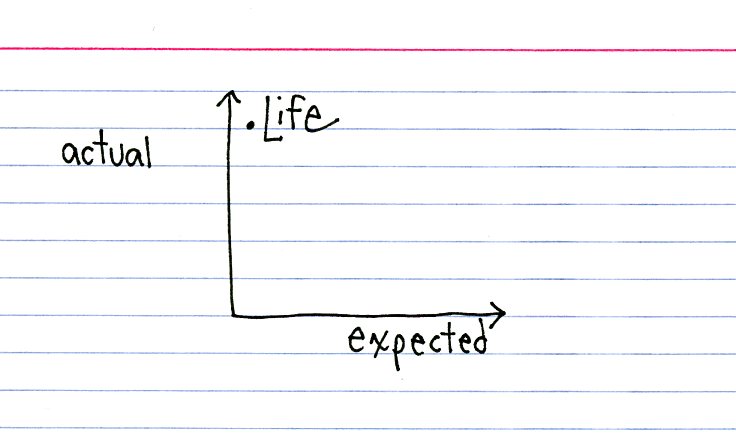
But it is what it is. And this image from [Indexed] - posted on xmas - makes for a good reminder.

The tagline for the post was "may you live in interesting times" - so a natural summer reading recommendation would be:

Interesting Times - discworld novel #17, a bit of travel, some intrigue and politics, but most of all a great read.

I just finished novel #38 -Unseen Academicals, a great riff on sports, crowds and dreams, so I'm a bit fuzzy on the details for I.T - having read it back in '97 or '98 - but seem to recall it being a bit free standning, in that Rincewind takes a trip to the Counterweight Continent, making it both a jumping on point for new readers (where have you been hiding? 70 million books sold or so? Get with the program!) and a change of pace from the more connected story lines involving the Watch and the Witches.

For a full overview of the Discworld books and their internal principal connections, the LSpace has a "map".

And for some colorful background on the quote or curse, Wikipedia has the goods.

Monday, June 3

Give me an L, an O, N


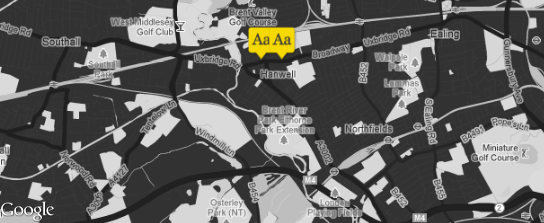
Map of the Week: London Typographica showcases crowdsourced images of lettering and typefaces around London. It uses styled maps to both provide a clean background to display their markers and to allow people to navigate to areas they may want to explore.
[src]

via Google Geo Developers Blog - love the concept, and the execution of the map itself. Also a big up for having made an app for gathering the images directly with geocoding included. They have even made two different styles for the map, overriding the default google zoom detail levels.

What i miss as a user is some sort of guidance - a path or five through all the images.

  • How do I find all the A's?
  • Where are all the serifs? 
  • The block fonts? 
  • The signs rather than the street art?
Apparently, there is something in the works - or at least the idea is there - one image had this;

Tags: lettering, caps


So, I'll check back in another couple of months (GGDB post from Dec-12), and keep playing with my little statue location info app.

Sunday, June 2

Consistency is a drag

"This is the best I can do" vs. "It's not good enough."
[seth]

Yes, it is another Seth Godin quote, there were a few in the draft backlog - deservedly so. Topic is failure to launch, innovate, improve and otherwise change.

For some it is due to a complacency - "if it ain't broke" type mentality. Change is hard and painful  Launching is scary. So it is a lot better to stick to the course, keep churning out the widgets / 30 second spots / 300 word pieces. We lull ourselves into thinking that we have tried and discussed other ways, but this is the best for the time we are in in, the people we have, the customers we serve.

For others it is due to perfection - it could be a bit better, the design needs some work, we have to get another blurb, run another focus group, wait for a better window, avoid this week, don't compete with that event. When there is no deadline, it is all to easy to let it be dead on the line instead.

The way to improve, is to change. And to change we have to get feedback. And to get feedback? Launch. Get it out there. Call it a beta or a soft launch, but get it out the door.


one caveat; make sure you set aside time to listen, evaluate and then re-launch or re-boot.

Saturday, June 1

Summer reading - comic; Looking for Group

That’s right boys and girls, we are pleased to announce that LFG Volume 5 (in beautiful hardcover action) is now available for pre-order.
For the last books (vol 3 and 4) I re-read the previous collections before diving in. This time I've just left it a bit to really enjoy it during what will hopefully be some leisurely summer days. Have pre-ordered all five as they became available, so a signed collection

If you are new to Looking For Group, it is a webcomic, available to read for free - or you can pick up an omnibus edition for a mere $40 and support the artists. It is an epic fantasy comedy / parody / slightly twisted telling - and often "laugh out loud" funny, in a literal sense, not just LOL tweet.

Friday, May 31

You should handle the truth

So that went well. Or not. I'm still having a hard time with blogger not having a draft option in the API. Makes it close to useless in 2013 with apps and push and IFTTT ruling the flow of ideas and content.

Ranting done, the post I was planning on writing is a short spin of this note:
"Open DataExecutive Order signed by President Obama. Along with the order is an accompanying Open Data Policy released by the Office of Management and Budget and Office of Science and Technology Policy"
[via Pocket, U.S. Government Data To Be Made Freely Available]

Working with data both for analysis and viz, must say that this is great news. Others have gone into the details, and compared it to the British version.

My main "yay" is the focus on tools, including simple wrappers for making just about any database into a functional (REST based) data source and API. Oh. And did I mention they are open source?

Pushing the legacy forward, I think (and hope) this will be remembered as one of the great Obama moments. Understanding promotes stability and peace, and understanding starts with access.

So, here's to hoping for a good summer for open data, followed by inspired announcements in more countries as fall sets in.

Thursday, May 30

...and I'll be forced to tell you no lies

Picking up the thread from last post on "lies to children";
People mean well, especially friends and family, but they're going to give you bad advice. ... PS the irony of this post is not lost on me.
As often a great mind-bender from Seths blog - how he gives advice about people giving bad advice.

There is something so simple about it, how most advice is in a way bad, because we can only ever give advice based on our own understanding, and not the 'real' situation. Nor can we (most of the time) decipher and understand the drivers for someone else, really see where they want to go, who they want to be.

And thus, our advice is more or less a story about how we think the situation should be handled to reach the resolution that fits our narrative - not necessarily for ourselves, but our narrative of the current and future state of whomever we are talking to.

Does that mean we shouldn't give, or ask, advice?

Or just that when we decide what to do, advice and "seven ways of" or "top ten tips" should be a set of inputs to calibrate our path?

I'm certainly not telling...