Showing posts with label prose. Show all posts

Saturday, April 20

Symmetry is magical, so 19-4-19 might make sense to dip back into the water. At least for a short swim and some thoughts littering an assortment of apps and inboxes.

Six Pixels is still going strong, and the talk with Paul on non-growth focus was sort of the tipping point to get back to journal mode. Because introspection sometimes needs verbalized ideas - the act of ordering words helps to map out the actual ideas.

Side hustle as a small thing, do it in between- a little at a time

Use it to test the waters, to learn and develop yourself. And maybe as a springboard — but don’t do it just to get somewhere else.

Makes a lot more sense than ruthlessly burning the midnight oil, at least if the goals isn’t to go all exponential growth, but to find a better you in a happy mindset.


That is all for now, as this is Safari doing the desktop editor - need to app it or perhaps stick with the alternative WP site, or make a new one to mirror automatically.

- ...and the sun is really back for summer...or at least spring 

Tuesday, August 20

take a trip, down mystery lane


Large version

Or Diagon Alley at any rate. It certainly feels a bit like magic to use Street view at normal locations. But then they go and get something like this. From Warner Bros studios, so obviously they love the exposure. The details are amazing, guess you can really zoom in on the HD copy of the movies and read the book covers and more.

Wednesday, August 7

Zen and the war of ideas


This is very much a work in progress, and jumping all over the place - as I re-read Zen and the Art of Motorcycle Maintenance ("Zen" later in the text for brevity). It started last summer, when Part 1 took on work vs passion, then part 2 explored the chapters dealing with mental models.

Then this year along with the general blog reboot, I got back to reading Zen. So, the third part in the flow of the book delved into insanity and reality. This post got pushed a bit further out in the schedule, but will also hopefully bring us back around to the end of part II - and the fifth post that snuck in and screamed to be let out.

Although, from rereading the quotes and notes, and getting them formatted below, it does seem like there will be yet one more for the road. We'll just have to see how it turns out - if it does run a bit long or gets a consistent flow.

All quotes are from the Kindle edition, with the location marked (@...) - and also linked

Understanding and knowledge - a little means a lot

Central to the mental journey, and also for the underlying motivation of the real journey - is understanding. A quest for knowledge, but also a desire to expand the actual "mass" of knowledge we have.
From what fragments of memory I have, Phaedrus had a high regard for DeWeese because he didn’t understand him. @2252
How can we extend our ideas? By reading things that are just a little bit hard to grasp, by having to reread, refelct and discuss - by not just flowing into the next chapter, but stopping.

And that is par of the motivation for me, in taking some extra time to re-read the book, but also in blogging about it along the way (even if it has taken quite some time, and a few stops along the way).

Zen is not just a story. It is not just a 'painted' image of the world and our roles in it. It is in many ways more about a path, a way to find 'enlightenment' or understanding, by pushing against some of the 'set' constraints.

Just like creativity often works best with certain limits (use only blue, no circles, ...),so basic learning needs to rest on assumptions and terms. But when you have the basics, then maybe it is time to question the assumptions, break the rules and explore why and how on the outskirts.

The real University is nothing less than the continuing body of reason itself. @2416
Because it is when we think and reason that we use knowledge. and when we share it we help it grow. So open source, sharing and collaboration, makes us push ourselves and express our preferences in terms of improvements. There is nothing better than showing how you want something "fixed" - rather than just complaining about the current state of things (or knowledge).

Which brings us onto the more spiritual part of Zen;

He became aware that the doctrinal differences among Hinduism and Buddhism and Taoism are not anywhere near as important as doctrinal differences among Christianity and Islam and Judaism. Holy wars are not fought over them because verbalized statements about reality are never presumed to be reality itself. @2311
Truth is not a given, not a final thing. From this perspective it is a process, and a goal, a state of mind more than anything written down and passed on. A path to understanding, not a set of facts.

Which ties over to motivation, or dedication - because it isn't about facts, you need to take a 'leap of faith' when you start a journey of this kind;
You are never dedicated to something you have complete confidence in. No one is fanatically shouting that the sun is going to rise tomorrow. They know it’s going to rise tomorrow. When people are fanatically dedicated to political or religious faiths or any other kinds of dogmas or goals, it’s always because these dogmas or goals are in doubt. @2456
.
..
...
....
.....
Just take some time to reflect on that.
.....
....
...
..
.
It was one of those moments as I read it. It just seems so obvious now afterwards. Sometimes it is too easy in hindsight.
Facts are beyond feelings
Passions are beyond facts

music
art
politics

We can engage because the answer is not given. There is no single way to see Picasso. Or to hear Vivaldi. You can't be sure if you are "doing it right". You have to have faith in your impression, your process and path. 


The path is the goal at any given time

The statement “To travel is better than to arrive” comes back to mind again and stays. We have been traveling and now we will arrive. For me a period of depression comes on when I reach a temporary goal like this and have to reorient myself toward another one. @2485
 always fragments, pushing forward. Each section a story unto itself.  But what is the overall flow? Is there even one, or are we just so good storytellers that we always manage to tie the treads together? Was it a step in its own right, or just a smaller fragment of things to come? How do we tell? How can we know?

“You look at where you’re going and where you are and it never makes sense, but then you look back at where you’ve been and a pattern seems to emerge. And if you project forward from that pattern, then sometimes you can come up with something. @2730
Is it storytelling or "lies to children"? Does it make sense because there is meaning, or because we make meaning?
And does it matter?
If we understand the events by the story, then the events have a part of that story, even if it is only a temporary collection of fragments. It is not right. Or wrong, fact or fiction. The story is. The whole of the parts is.

Molecules are molecules. They don’t have any ethical codes to follow except those people give them. The test of the machine is the satisfaction it gives you. There isn’t any other test. If the machine produces tranquillity it’s right. @2671

 gaggia time. serenity now. it just is.


Saturday, July 20

Story sketch - the forking election


Saw this tweet way way back, and RT'ed with the comment; there is a short story in that. 
@mwiik Thinking: In the future, candidates for president will advertise "fork me on github" #hacksociety
Not going to write out a full story, most likely, but wanted to get some ideas and hooks down here in case it feels right or triggers something else. Maybe something to pick up in time for NaNoWriMo, or just a fun fragment to look back at a while down the line.

title ideas

the forking election
one man, one fork
don't just vote, push

chars

bob - candidate 1, running for the incumbent party, wants to change it up, but unsure of how far his mandate will hold. Wants to use politico.code [PC] to explore the fringes.

harper - the upstart in the challenger party, pushing for a broader agenda. has a long stint as founder and tech lead behind him, before converting to politics. still dabbles in open source, to keep connected and credible. One of the first ten politicians to structure his platform on politico.code [PC] , and a strong supporter of the vote-platform auto integration

emma - current tech lead for voter engagement at the incumbents, has been an intern in one of harpers start ups, and also at [PC] before getting the current posting. Loves the tech chances the job offers, but unsure about the nuances in the politics of the party.

NN - political hacktivist, loves to challenge politicians on their lack of track record for voting along their stated platform.

scenes

bob office, emma and bob discuss areas suitable for wider testing on [PC] 

coffee shop - harper surfing blogs for ideas, new ad campaign, finds discussion with prominent political thinker X and NN, decides to "challenge" NN and his ilk in the campaign - "keep me honest"
(soundtrack; Count Basie, the kid from red bank, opening track on Complete Atomic Basie)

bob launches his [PC] effort just hours before harpers campaign kicks off, making it a feeding frenzy for talkshows, blogs and corridors
(soundtrack; Christina Aguillera, Fighter)

talk show - bob and harper face off, hangout style on boingboing - [PC] goes mainstream, signups skyrockets

challenger party first tier nominee hopefulls finds themselves sidelined, all the debates are about bob vs harper - with [PC]  taking center stage

the election sees record particiaption - both of "old school" voters who want their voice heard directly, and by the "new gen" of the [PC] involved activist coder voters

closing scenes, bob and harper watching the buzz as voting closes, blogs, feeds, dashboard from last minute [PC] suggestions

THE END 

Tuesday, June 25

Better to have than never?


Just a short post, going out directly not from a draft but from a too long open tab, as summer vacation takes it toll on the posting streak;


Now or never, now or never, now or never—the words niggled at me like a song stuck in my head.
The quote is from the intro to the story in PodCastle 219: The Circle Harp - and you can listen in full, for free as with all the goodness from Escape Artists. The theme is about taking a chance or sticking to what you know.

At what point will it be better to go for something "a bit over the moon", rather than playing in the same small pond? Is it better to lose in the big leagues, than to dominate in the minors?

Can you develop your art without stretching beyond the comfort zone? Do we need to push it into the next gear? Or is there a place for doing it good enough, providing what is needed and valued by the audience we have? Trade off or cop out?

- ...and the sun is promising a warm wonderful day of summer, and 7 new drafts made it into the backlog via ifttt ...

Tuesday, June 4

Not what I expected - but summer reading


But it is what it is. And this image from [Indexed] - posted on xmas - makes for a good reminder.

The tagline for the post was "may you live in interesting times" - so a natural summer reading recommendation would be:

Interesting Times - discworld novel #17, a bit of travel, some intrigue and politics, but most of all a great read.

I just finished novel #38 -Unseen Academicals, a great riff on sports, crowds and dreams, so I'm a bit fuzzy on the details for I.T - having read it back in '97 or '98 - but seem to recall it being a bit free standning, in that Rincewind takes a trip to the Counterweight Continent, making it both a jumping on point for new readers (where have you been hiding? 70 million books sold or so? Get with the program!) and a change of pace from the more connected story lines involving the Watch and the Witches.

For a full overview of the Discworld books and their internal principal connections, the LSpace has a "map".

And for some colorful background on the quote or curse, Wikipedia has the goods.

Monday, May 27

Quality of Zen

In some ways this is the third post in the 'reading' series, but since I'm skipping to the end of Part II for this one, I'll try to add it into the flow later when the gap is closed. That is, covering the parts from around location 900 up to 3000 - and seeing how much still makes sense, in so far as the book makes any sense in and of itself.

So, close to the end of part II - we are back at the old school, revisiting the forgotten past - and having memories come back, along with some of the core ideas;

"What is quality in thought and statement?”

Quality…you know what it is, yet you don’t know what it is. But that’s self-contradictory. But some things are better than others, that is, they have more quality. But when you try to say what the quality is, apart from the things that have it, it all goes poof! There’s nothing to talk about. But if you can’t say what Quality is, how do you know what it is, or how do you know that it even exists? If no one knows what it is, then for all practical purposes it doesn’t exist at all. But for all practical purposes it really does exist. Location 3003

Quality is intangible  it is not something we can easily measure - although many characteristics related to, or derived from quality can. Durability. Workmanship - as a lack of errors, a precision in production and an adherence to spec. Yet so dominating and impactfull a concept. 

Quality is how we define and refine our positions. We like to think we make good choices. And by extension  think that quality is what we prefer. But why do we prefer it- for any given value of it? Is it the sum of the parts, the overall feeling, the little details? 

How has branding taken over the role of quality and entertainment the role of reflection? 

Brands were in parts created when we stopped buying direct. When we didn't any longer have a face to face relationship with the man who made our candle, we had need of a way to differentiate and remember. Both as seller and buyer. 

But now? 

When it is the same factories, using many of the same components that make our gear? Can you brand a pure experience, like using software? Or does it take a product you can hold and compare?  This could be why the iOS volume has been so great compared to previous pc/laptop. The touch experience makes the app and the content tangible in a different way. Makes it yours, even if it is shared by millions. 

How many people used to created, in the age of radio? And the early days of television, was it overflowing with people filming their own shows? No, the dream of a participatory society is probably just that. "Most people" don't discuss politics, but how their team did and how dinner tasted - not the ecological impact of using that brand of beef.

By that extension, is price an indicator [of quality] or simply a rationalization to signal intent and aspiration in a broader context? Most books cost the same, and seeing one movie over another isn't likely to get you a discount. But in subtle ways there is a price indication in play. Watching TV at home is cheaper than going to the movies, which is again outpaced by seeing a play. 


- ...and the sun brought me out, and the idea drove me inside, for it was one of those times...
[soundtrack: Volta - by Bjørk, faded down to set or keep the mood]

Sunday, May 12

Another verb in the stairs

@osol: "Increasing the knowledge and vocabulary of a child before age 6 is the single highest correlate with later success."
https://twitter.com/osol/status/255925136400719873

Guessing still no twitter cards in blogger?

Oh well, is is a quotes from NYT - in a piece on the challenges of teaching, and it links onwards to a review by E. D. Hirsch of the book "How Children Succeed" (kindle) which is still creeping up towards the top of my 'soon to read' wishlist in Amazon. 

But the point is well made, building both vocabulary, reading skills - and interests at an early age is seen as a boost up, starting the "race" already at speed rather than from a standstill.

Looking at the "most sold" lists in the iPad Appstore I wonder how this will play out over the next years. 
The top ten paid apps are more and more often keyed towards kids edutainment and learning. Estimates put the number of tablets sold in Norway last year at around 500k - that is one for every four households. And expected growth of 50% in 2013, so an additional 750k.

Does that mean that "everybody" is getting a tablet, or that some households have two or more? Most likely the latter. And add in willingness to pay for apps, and the time to use them with the kids, and we are talking about a possible gap of basic skills going into the first year at school. This is the digital divide. Or?


Sidenote;
Considering how much effort Amazon is apparently putting into "big data" and predictions, i'm amazed at how little weight the wish list feature is given. I buy probably around 70% of my reading from there, with direct purchases, mainly from social media recommendations or posts, making up ~25% and "samples as reminders" the last 5%. But when I browse around it is mostly my recent history or similar purchases that get pushed. And the oh so cute "get yourself a little something". But where is the "hey, looking at this book and planning to read that book? Then you should really check out..."?

Friday, July 13

Timeout: Nix magical journey


Another timeout? Already? And in the middle of the day?

Oh, the joys of async publishing, writing, listening and distribution. 
What better way to celebrate all that than with a podcast episode.


PodCastle episode #207: Hope Chest from May 8, 2012 is a "PodCastle Giant" - meaning that it clocks in at just over an hour. But it is time well spent. It is read by Mur Lafferty (the Mighty, Mighty) - their tagging, not mine - giving it that extra bit of geek-fu goodness on the way. 

And, most importantly, it is written by Garth Nix, amongst his 54 books on amazon is also an ebook collection of Hereward & Fitz who have made many a fun journey on PodCastle.

This story is a bit darker, it is in many ways a classical "coming of age" or "heroes journey". But with q few twists and turns along the way to keep the listener paying rapt attention.


Get it in iTunes, on the site - or via direct link (over an hour, so mind the filesize)


Thursday, July 12

Zen and strangeness of machines

This is the second part of my braindump, notes and reflections as I read Zen and the Art of Motorcycle Maintenance.


Part one is just a short link away; Zen and the struggle of blogging

And so we move on, along the journey across America, but also into the mind and madness.


instagram - tech for art?
Blind alley, though. If someone’s ungrateful and you tell him he’s ungrateful, okay, you’ve called him a name. You haven’t solved anything. @ 846
The theme for this part of the story is mental models. We start to dig deeper into the split between how the two men relate to technology - Motorcycle Maintenance. The resistance to technology and insights makes a twisted sense when compared to the attitude of the farmers.

When you want to (and can!) make a better life, it makes sense to understand and celebrate the technology that makes that possible. 

But when it is a given for life as you know it (love it or hate it...) - then it becomes much easier to try to mentally rebel. To break free from the small things, because you are too dependent on the larger comforts to let go. Clinging on for the love of life.


The best camera is the one you have with you
“That’s what you don’t see in a car, I suppose.”


Framing makes a small detail stand out.

Like the two instagram snapshots I've added here.

One is of a lamppost not ten yards from my front door. But one day I walked on the backside of it, and two pictures "jumped out" at me. The one included above and it's twin, where the bracket was loose and the nails all gone.

The other is a daytime shots of normal clouds. But taken with my sunglasses as a "natural" filter before the choices of instagram it seems magical and mystical. The ease of use of the built in filters made me think of other ways to adjust the images on the fly.
l
But it also imposes a context that isn't there in "real life"

Sometimes we have to step outside, in order to see things in another, wider context. Or simply to bring in wild ideas that trigger new usable ideas.

We also need the models and simple boxes to cope. In a episode of House MD from 2005 (summer reruns in Norway as well...) the patient was another doctor working on helping fight malaria across Africa. And House implied that the ability to "zone out" the problems across the world (or just in the next town over) was a Darwinian trait we should cherish. If we don't focus on helping kin and those close, then they aren't there for us when we need them. And then we all fail.

We were both looking at the same thing, seeing the same thing, talking about the same thing, thinking about the same thing, except he was looking, seeing, talking and thinking from a completely different dimension. @ 983
Again with the frames and models - now we are moving beyond just relating to tech, and into the perceptual models themselves. 

I got my first solid intro to the practical applications of using varied frames of reference first year at uni. A course built around Lee Bolman and Terrence Deal's classic management book (fourth edition, original in 1984) presenting the the four frame model. The main takeaway is how things "make sense" within each frame of reference, for the people who have "the glasses on" and play by the rules they understand or believe. Internally consistent logic. 

 It gives us mental maps to OUR world for US. And it also helps to better understand others and their actions. At least if you take the time to step back, examine the situation or relationship from other models or viewpoints.

The split in the book also brings to mind the "thinking - feeling" dimension. The third Jungian split in Myers Briggs test. How we (think/prefer to) make decisions.


And the final quote of this post sets the stage for some more ideas, but just a simple number for now: 227
Unusual behavior tends to produce estrangement in others which tends to further the unusual behavior and thus the estrangement in self-stoking cycles until some sort of climax is reached. @1253

Wednesday, July 11

Timeout: Horror with Yeats

Nice a break? Take a trip in time and space with a 'horror' story from the poet Yeats. 

I'm still a bit backlogged on podcast, even after cutting down to the bare essentials, but the trifecta of story-goodness that is EscapePod, PseudoPod and PodCastle still maintain center stage.

But this story, namely Pseudopod episode #273: The Crucifixion of the Outcast by William Butler Yeats - originally published in 1897, and podcasted on March 16th, 2012 - is a standout piece. 

The descriptions, the characters, the tone. Dark, but not extremely scary or bloody. Poetry in action. 


Get it in iTunes, over at the site or from the link;


Saturday, June 30

Write me a story - it's good for you

Clive T column in Wired 20-05,  talks about the creative benefit of writing fanfic.

Interesting points on the value of working within constraints, having to mold your story to the rules and themes of the "canon" you are working with. But it is unclear why this would be better or preferable to "pure" creation, be it written or other forms of art.

When you play in someone else's sandbox, you just go with the rules - sure, you can hear things in a vacum - rather than exploring the boundaries and rules you find suitable.

So, fanfic as a testing grounds, a "gateway drug" into creating - and most importantly into taking feedback on the work you make?


- ...and the sun was here, then it hid away again, playing with us for the weekend once again...

Sunday, June 10

Neuro-pattern-light

I hate the new blogger. It killed the original version of this post as I hit save. Then I tested a new blank post and it failed again. Could somebody please tell Google that there is this thing called iPad, and if their solutions continue to work as poorly a lot of users are up for grabs. I have already stopped most my newsletters to gmail because the use is a hassle (yeah, could add it as account, but with work email that was a hassle in the first iteration at least)


And now tumblr looks really good, why even wordpress is starting to come around to ios as a platform of choice with the app growing stronger every incremental release..


On to the recreation, thankfully only two paras in before hit the save, but still two too many...


Neuro-pattern-light...or why I love william gibsons writing.

I think it has a lot to do with growing up alongside his three trilogies.

Read neuromancer et al in early teens at school, when computers consisted of commodore 64 (or a 128 as I had), used mainly for games and the occasional demo. A friends father had a Mac that we got to use for a few school projects - typing up the report and putting in some pictures.

Then picked up the bridge books more or less at university, where dot com was becoming a phrase, but a bit before the boom/bust really started. Back when Fast Company was still mostly about business trends.

And pattern rec is one of the last printed books I bought (fiction and regular non fiction at least) - spook country and zero history were delivered directly to a kindle or the kindle app on iPad. Read digitally and instantly on release. No time lag for cross Atlantic distribution or priorities.

My teens, my twenties, my thirties. As the world has gone digital and then some, so has my life. as the future has become today, so his books have merged into "reality", blurring the lines more with each passing chapter.


For books and background, check the Amazon author page


INTERVIEWER: For someone who so often writes about the future of technology, you seem to have a real romance for artifacts of earlier eras.
GIBSON: It’s harder to imagine the past that went away than it is to imagine the future. What we were prior to our latest batch of technology is, in a way, unknowable.... very, very difficult to conceive of a world in which there is no possibility of audio recording at all. Some people were extremely upset by the first Edison recordings. ... It sounded like the devil, they said


The magic of not having. So good quote - had to brutally trim it down a bit, because you really should go over there and read the whole thing. Now. Come back afterwards. More to come here as well...


Because it is easy to add in the blanks, merge things (like a mobile phone and a mp3 player... Or a pc and a phone), but close to impossible to even remember back five or ten years, how much of a leap a simple innovation like the Palm Pilot was. An actual digital assistant in your hand. And it could do other things. Small games. Like magic.


Emergent technologies were irreversibly altering their landscape. Bleak House is a quintessential Victorian text, but it is also probably the best steam­punk landscape that will ever be. Dickens really nailed it, especially in those proto-Ballardian passages in which everything in nature has been damaged by heavy industry.


More of Dickens is definitely on my too read list, inspired this time by a piece on new bio on him. The British televised versions are great, and the podcast librivox version of two cities is killer. Like Stackpole, I firmly believe that the model he used to serialize his fiction is finding a new life in terms of shorter ebooks, faster turnaround for stories and generally more adaptability to reader expectations. 


... I remember walking past a video arcade,... seeing kids playing those old-fashioned console-style plywood video games... were so physically involved, it seemed to me that what they wanted was to be inside the games

...one day, I walked by a bus stop and there was an Apple poster. ... holding a life-size representation of a real-life computer that was not much bigger than a laptop is today. Everyone is going to have one of these, I thought, and everyone is going to want to live inside them. 


Woot! Loop in time. Arcade games as the driver, then apple as the trigger for seeing it "everywhere". Merging insights and intuition, that's what makes the book so much more than just a cool story. 


Today Apple is slowly moving us away from the PC age, into mobile and tactile  with the iOS touch interface. And once more games are actively taking a huge part in both pushing the hardware (thereby feeding the need for upgrades and rapid development) and the user interface - Angry Birds as touch training. Speed, precision and flexibility. 


The best way to get someone comfortable with a mouse back in the win 3 age was Solitare or Minesweeper. Sit them down, show them some serious stuff, then give them a ten minute "break" - after opening the program. We learn when we want to learn, when there is a clear reward rather than just an obligation. 


I’ve always been taken aback by the assumption that my vision is fundamentally dystopian. I suspect that the people who say I’m dystopian must be living completely sheltered and fortunate lives. The world is filled with much nastier places than my inventions, places that the denizens of the Sprawl would find it punishment to be relocated to, and a lot of those places seem to be steadily getting worse.


Putting things in perspective? How to compare to Dickens? Is he dystopian or simply telling of the underbelly of the dressed up pig? 


I for one didn't really think of Neuromancer as dark at the time, compared to something like Alien it was a happy place all around, with cool tech and the chance of making it big. 


That is one thing that is changed with the latest novels - or perhaps as much with my reading and views - sure there is a potential big score, but you get the feeling that just getting out or onwards is as much of a goal for the characters. 


The settings are more "glamour" compared to the first books, but in many ways it still feels more empty and forsaken. The art hidden from view, giving only a select few the enjoyment or the experience. The secret clips and the chase for just a little bit more.


First read about the interview care of one of the @greatdismal musing, but at that time the only online version was via a sub to P.R, so that was $5 lost revenue for them, as I'd have gladly paid for just the issue or the article (more or less the cost of a single copy newspaper here, so comparable value)

But then I saw it rt and checked the link - lo and behold, the full version is up. So it seemed a great test for iOs 5 reader mode, and also for the new +style blogger. First is OK, but lacks page jump/pagination (skip full screen height down). 


The other is another crappy google conversion. As a blog writer, the original blogger was as good as or better than any seen since. New might be ok on pc, but today that is close to irrelevant. Same reason can't really care about plus itself. Plain sucks compared to any twitter app.

Monday, June 4

oh my apple, a run-down on iBooks maker and iTunesU

ibooks author, evil incarnate because anybody can't make money outside iBookstore - or a true revolution for learning and coursebooks?

That was more or less the two sentiments raging through the blogs and twitter back when Apple launched their iBooks author software. And for once it was a subject worthy of some strong opinions here on the blog, just not musings.

First off, the student perspective.


Having spent 4.5 years with four or five courses each semester, with an eclectic mix of solid US hardcovers, printed handouts and student curated leaflets I've spent my share of time pining over the cost of new editions and hunting through used versions for fair quality ones.

Also, with out a dedicated reading space for the first two years, dragging around 500-1000 pages books, three or four at a time for that days classes takes it toll in terms of priorities every day. For study groups we actually set up a schedule - who brings which book on what day.

Apple 1 Haters 0

Then there is the year after - when you take the next class, it would sometimes be useful (especially at the start of term and before exams) to review a bit from the first book, but that meant sunk costs rather than recouping at least parts of the cost.


So, Apple has made a deal with the major text book publisher, and is pushing the price down. Way down. Talk of a max price set at $19 ???  New, normal books retail at at least three or four times that.

As an example, the MCGraw algebra book sits at $14.95 list price on iTunesU, while Amazon has a similar book at $93. The latter you can buy used and then resell while the former could be bought with volume and education discount (also sales tax free).

Imagine a student with student loans, considering getting an iPad, but needs books instead. Now every book saves the student over $40 - that adds up fast to finance the device instead. And let's face it - students want toys as well.

Apple 2 Haters 0


Then the educator perspective

The tools is free to download. You can import just about anything into it - word, pdf, code, and so on.
And anything shared directly on campus, be it in sorority, by professor or ta, or simply student groups making their own projects available - is also free, and can be distributed directly or via iBookstore / iTunesU

Apple 3 Haters 0

But... you have to have a Mac to use it. And a new one at that. And also you would probably do well with an iPad for testing the actual output as well. And the majority of educational institutions (over here at least) are like the corporations, stuck with a bunch of pc's. Of assorted age and quality. So the upfront cost could be a bummer.

Apple 3 Haters 1


Well what about the tech?

Is is all about putting things together. Not making anything that didn't already exists in some form or another.
Tools exist — they’re getting more powerful everyday — that allow us to treat digital objects as digital objects: to collect and organize them, to fashion stories from them, to turn them into bespoke devices uniquely tuned to unlocking the world’s mysteries.

And while iBooks is not the only or maybe best way to collect and enhance "other" media alongside text. Storify could do a lot of it, and a version of prezi more suited to long form text mix.ins wouldn't be all that hard. Why, all the assorted "html presentations" would be well suited to giving a structured mix of text, images, video and plug ins. So why didn't anybody else do this?

Adding annotations, and storing them. Also packaging the content for download, with a quick course guide - read this, check. Now that is usability first and foremost. And that is why Apple might be the only one who really could make this.

Apple 4 Haters 1
The output of iBooks Author is no more intended to be an industry standard than are any other Apple-proprietary document formats — Pages, Numbers, Keynote, etc

Is it so strange to see that this is not all that different from Word outputting mainly Word .doc files - and actually using it's import from WP to move the market - or Microsoft XNA for Xbox live games not running all that well on a PS3?

They never said they wanted to make a new html. In order to actually move the market companies often times have to make their own solution rather than open standards. Kindle wasn't the first ebook reader by a long stretch. But it worked. Well. And it was easy enough to get books made for it and sold hassle free. While it could also read "generic" formats.

Apple 5 Haters 1


And in closing - the fine print


But the contract / terms and conditions, and the communication from Apple regarding the changes they made to clarify it? Yeah, vintage Cupertino.

Apple 5 Haters 2


And not getting worldwide deal in place, thus leaving a lot of us "out in the cold" once more? F.U publishers, studios, and assorted guilds.

Apple 5 Haters 3


Overall, big ups to Apple for moving the educational market forward, probably kicking and screaming most of the way.

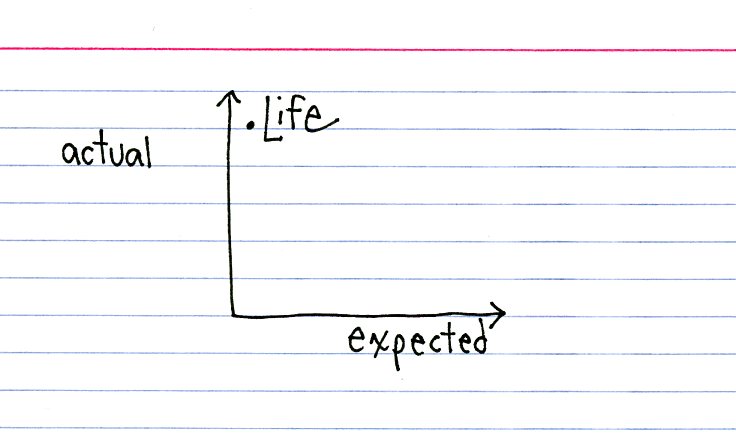
Misty eyed

Quick post - and a bit of poetic ramblings to go on before we call it a night

Wired 19.02 had a list of terms for the underworld, or hell - and one just jumped out at me;

Mist of Darkness

2. Pet 2:17 - Guessing not a pet, but a biblical reference - so that's something to go on... and with google that was more than enough:

King James Bible (Cambridge Ed.) [1]
These are wells without water, clouds that are carried with a tempest; to whom the mist of darkness is reserved for ever.

So much more vibrant than a lot of the later 'translations' of the text. It paints an image or three. Of despair. Longing and suffering. Unrest. And at the same time loss.


- ...and the sun can't follow where we are bound to go- into the darkness, and then beyond, onwards, downwards, to the other side...

Monday, April 23

Shall I compare thee...

Shakespeare Empowers Me to Speak:

My response is always, “Once you’ve had a donkey head on stage reciting Shakespeare, you can do anything.”

- a great quote from the post by CC, reminds me of way way way back when memorizing one of the sonnets, mostly for recital in English class, but also partly as a conversation piece and memory exercise.
Today is The Bard’s birthday and I’m writing this post as part of the global celebration.
Strange how many things happen on a given day, and which ones we choose to mark, remember or let move us to action. 'tis truly a mystery how man walks the stage.

Monday, December 20

Once upon a time a new technology cut the price of books by 90%, flooded the market with many times as many as before crowding out the real classics, and supposedly cut into the quality and care given each book.

Ebooks?

No, still just the Gutenberg and moveable type innovation.

The literate classes experienced exactly the kind of overload we feel today — suddenly, there were far more books than any single person could master, and no end in sight. Scholars, at first delighted with the new access to information, began to despair. “Is there anywhere on earth exempt from these swarms of new books?” asked Erasmus, the great humanist of the early 16th century.
[Boston globe]

And yet we still read. In fact most people can read in the Western world, even if they chose not to buy prose books all the time.
So the market is "flooded" with readable content;
296 newspapers in 2003. These account for a combined circulation of more than 3 million.
Wikip

Would the world suffer if there were fewer printed options?
Is online and digital a viable substitute? For news? prose? Poetry? Facts?

Apparently it might look like the politicians here in Norway will have to make some educated guesses along those lines - the main ruling party (labour, social democrat) is more or less pushing for sales tax to be applied to electronic books (but not printed) and the discussion is on for the future of media support (currently newspapers get no sales tax added, magazines do get the full 24%) in general and for digital in particular.

Fun times ahead. Might just need to look into an US or online based payment solution for my Kindle needs.

Wednesday, December 15

Storytelling, what is it really?

Interactive book
Doesnt work out so well, according to N.carr's post, inning off another 'story' on interactive storytelling.

"As soon as the reader begins to fiddle with the narrative - to take an authorial role - the spell of the story is broken"

But isn't that what immersive games are all about? And they are certainly "designed by comittee", yet the time apent with games for youths would seem to surpass the lovely old linearly novel.
So, it is possible to do way more in terms of story and involvement, butmere word are not really enough to "keep the spell" - it takes a full experience, and even then it is hard to do (but then again so is writing a really great novel as opposed to just airplane fare...!

Another angle I miss in the post is the bardic / fairytale angle, when an oral story was told and retold countless times and over a length of time - with the Teller adjusting to fit the audience reaction and sentiments.

- ...and the sun gives scant comfort, with solid ice and show on the grpund and 8-10 below, 'tis winter time again...

Thursday, July 29

Never the twain shall meet?

After jumping past some other stories and book ideas I came across a good short essay on Mark Twain, but also or more importantly, on writing and self insight

There is a fascination about writing, even for my waste-basket, which is bread & meat & almost whiskey to me—& I know it is the same with all our craft
Mark Twain

Sometimes you just have to do it because it needs to be done, more than for any hope or glimmer of recognition, readership or even impact. And if that drive takes you, then at least you are taking the steps forward, honing the skills, the craft and the willingness to create more and better work over time.

Twain did, even if the The Prince and the Pauper (amz) failed miserably in terms of economics, readership and tech according to the essay


Just do it.

And then do it again
And again

Wednesday, July 21

muse

want gives inspiration?
a picture?
a song?
a sound?

the view out the window
a cup of latte
an article

curling up on the sofa with a book

or just a random flash in the back of the mind?


(initially an old draft, not sure why it never made it - but here it is - cleaning out the closets!)