Showing posts with label projects. Show all posts

Friday, August 9

Make mistakes. All the time.


Quote and image from Chris Brogan this time around - on the willingness to be wrong;
"The amount of mental energy we expend by trying to be right all the time is a waste. I have come to learn that it’s a lot easier to be wrong from time to time, and that the process of being wrong can certainly speed up the finding of what it is that ends up being right."
[Be Willing to Be Wrong]

Part of a recurring theme here - failure is not a bad thing. Failure is bad if you don't use it for something. And it is better to "fail fast", than to drag your feet - or keep pouring resources onto sunk costs.

As long as you are open about it in the process as well; our best estimate is that.... based on what we can find today it .....

Decide how much time you have to make sure, then use your best judgement, launch, measure, change and do it again.

Don't go for perfect track records.
Go for always trying.
And always improving - if only by a little bit each time. It adds up.

Tuesday, July 2

No fear no launch?

Hence the opportunity. If you do things that are safe but feel risky, you gain a significant advantage in the marketplace. [seth]
Since everybody else is shying away from those things that feel risky, but in fact are probably not - just new and strange, actively pursuing those "blind spots" can be a worthwhile endeavour.

This of course is based on a few assumptions running as a red thread through seth godin's later works;

Fear is a natural thing, but not a rational one - meaning it doesn't really make sense to fear the things that were scary 10 000 years ago (change, loud noise, uncertainty) when we have culturally evolved our settings to such a degree.

Secondly, you have to be able to differentiate risky from risk - some things and efforts are still liable to burn through a lot of money. Fast. And depending on your position that could hurt. But doing an online start up, using cloud services and open source baseline, you can scale both up and down a lot more effortlessly than during the 2000 bubble.

Third, it has to be something that is sustainable, and not something everybody will just copy when you have proved it viable

And that last part is probably the hardest, with so many people doing start ups, apps, re-nnoavtiong or pivots - finding a good spot to take a business might be harder than going ultra niche and global.

So, let fear be an indication that you are moving into a zone of opportunity rather than a danger zone, but keep the scope sane

Wednesday, June 19

Urgency is a state of mind

Of course you need to click and get all of it from Seth Godin: Urgent, please read asap

That's what gets done, of course. The urgent. [...] The problem, of course, is that the queue of urgent never ends, it merely changes its volume as it gets longer.

Stay the path
Back? Yes, you need to finish up here, then on to the next post or the next feed. Then that other app. And then newspaper. Quickly back to the inbox, skim a few more messages.

Fire off a reply, forward another message and push the third into the todo folder. Not the urgent folder, or the current project. Just the todo. For those days that never come.

The daily uploads to YouTube are probably more minutes of video than you will watch. Same for the snaps on insta. Not to mention the number of newspapers and tv channels around the world.

There is no way you can see, read, understand or watch it all. FIlters and priority is a fact of life. No one is going to celebrate if you give it the extra 5%. They will just assume you have yet another 5% and continue to push things your way.

Me? 

I turned off my work email on the iPad since that is my main device for consuming news and secondary for books. Set up auto away mode on the phone, and if I'm off for more than a weekend I'll turn off push notifications on the phone as well. Made 8 subfolders under to do, all for storing ideas and links that might be useful, depending on which project actually has priority at any given time.


How are you swimming in the currents, playing with the flow and surfing the expectations?
#urgenttodo

-...and the sun will shine, and the rain will fall, and we'll be here, through it all ...

Friday, June 14

Share a way, then I can find my way

[chris brogan] did a post called "Owners start with recipes";

I’ve made a mistake over and over again. I continue to believe that we don’t want recipes, that we don’t want leaders. But neither are true.
[...] If I don’t show you what I know, and if I don’t show you how to cook a “something,” you might not feel confident enough to first replicate that something, and then vary and create your own magical dish.
It feels so right when you read it like that.

Not everybody is an explorer.

We can't all make our own MVC javascript framework (or we shouldn't - but that's for another rant)

But at least some thing are better off with a bit of guidance.

I had played around with d3 a bit - but it was only with Scott Murray's brilliant book that I both sat down for some extended time - and got a lot of ideas for minor tweaks, and then put some into the wild, and got more ideas by seeing other projects. All because I knew I had the "basics" in hand should I need to reboot.

The book is both a contained entity, promising that you can get through it and on to your own playtime, and a natural progression - chapters and pages flow from the barest basics to fully working and useful examples

Also probably why business books will continue to sell well - there is always a need for some handholding, just getting a consistent story and a feeling of "overview".

Not to mention consulting. Having someone who tells you that "this is the way it is done in business A and market B" makes for a good starting point.

But for both books and consulting, the difference between wasted time and world class can be hard to spot - since it depends a lot on your own situation and level;

- how far along are you on your journey from reading the FAQ to writing it?

Thursday, June 13

Some lines are there to cross, others to sharpen the image


The power of zero spend [src];
Rigidity is rarely your friend, but well understood boundaries make decision making a lot easier.
Two Seth quotes almost back to back, but they are from months apart initially. This also marks a push of the draft box into single digits. And that is a nice simile here - having pushed a lot of links partially out by lack of proper draft API, it was time to clean up the blog. Doing that by focusing on getting out at least 5 posts each week, and mainly by eliminating the backlog has made for a bit of extra structure and push.

Same goes for getting a project off the ground - set some (arbitrary) ground rules;

  • we'll be testing 3 ideas at a time, but revise that to 2 if the differences are large enough during first runs
  • each period will be more or less a week, so we have time to get data, make new ideas and run the numbers
  • keep the numbers simple, and consistent - do initial comparison within each test, then combine and compare after 3-4 runs
SImple steps, but makes the difference between going all ad hoc, and being to rigid to flex out the time. 

Had a similar experience in terms of design constraints - a subcontractor just blew past the boxes that had been set up. But the end result was so much better, and inline with the actual goals (rather than the guides), that is will serve as a new template - at least for now.

Some boxes you play nice with, others you just rip apart, and use the shreds to pave a path forward.

But how do you figure out ahead of time which kind of box you are in?

Wednesday, June 5

I want to do it all, and then some more


How do you decide?


Chances are there are more thing you want to do, than people to do it.
More ideas than project teams.
More bugs than developers, never mind testers.

Should you focus on those big things that "wake up the neighbors" - attract a lot of attention and flair, preferably within the niche or market you play in - or should you do a lot of smaller, unknown and unknowing tests? Build the future stepwise, or stay the course first and foremost?

How do we find a balance? 

Can we?
Should we even try?

One reason that incumbents are so often defeated by newcomers is that the incumbents put their best people and their urgent focus on the stuff they used to do (like winning Pulitzer prizes, selling ads to cosmetic companies and counting dead trees) while the new guys have nothing but the new thing to focus on.
[seth, who else?]


Are you doing it wrong if you do what you know, what makes sense right now, and what "everybody" else is doing? Is radicall innovation and transformation advisable, never mind possible? Is it right to say to your current customers "sorry, we want someone else, so you'll be getting an inferior product - but it will be a lot better in a while, albeit something completely different"?

Apple could do the iPhone because they didn't have a phone business, didn't have telco relations to maintain, and an upgrade path to stick to. 3g, 4, 4s, 5? Incremental wrapping and icing on the cake.

Apple could also do the iPad, because they had 10% or less market share for laptops. Microsoft couldn't for the same reason. They had too many partners to placate, making the assorted touch screen laptops never-rans.

Facebook bought Instagram. Even if they had the bigger volume of users. Even if they had apps and were THE photo destination. But they didn't have or get mobile. As a core. As the only thing. Do they now? At least a bit more than before the 1 bn.

Just right, just so?


Monday, June 3

Give me an L, an O, N


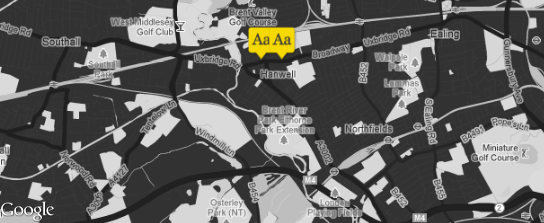
Map of the Week: London Typographica showcases crowdsourced images of lettering and typefaces around London. It uses styled maps to both provide a clean background to display their markers and to allow people to navigate to areas they may want to explore.
[src]

via Google Geo Developers Blog - love the concept, and the execution of the map itself. Also a big up for having made an app for gathering the images directly with geocoding included. They have even made two different styles for the map, overriding the default google zoom detail levels.

What i miss as a user is some sort of guidance - a path or five through all the images.

  • How do I find all the A's?
  • Where are all the serifs? 
  • The block fonts? 
  • The signs rather than the street art?
Apparently, there is something in the works - or at least the idea is there - one image had this;

Tags: lettering, caps


So, I'll check back in another couple of months (GGDB post from Dec-12), and keep playing with my little statue location info app.

Sunday, June 2

Consistency is a drag

"This is the best I can do" vs. "It's not good enough."
[seth]

Yes, it is another Seth Godin quote, there were a few in the draft backlog - deservedly so. Topic is failure to launch, innovate, improve and otherwise change.

For some it is due to a complacency - "if it ain't broke" type mentality. Change is hard and painful  Launching is scary. So it is a lot better to stick to the course, keep churning out the widgets / 30 second spots / 300 word pieces. We lull ourselves into thinking that we have tried and discussed other ways, but this is the best for the time we are in in, the people we have, the customers we serve.

For others it is due to perfection - it could be a bit better, the design needs some work, we have to get another blurb, run another focus group, wait for a better window, avoid this week, don't compete with that event. When there is no deadline, it is all to easy to let it be dead on the line instead.

The way to improve, is to change. And to change we have to get feedback. And to get feedback? Launch. Get it out there. Call it a beta or a soft launch, but get it out the door.


one caveat; make sure you set aside time to listen, evaluate and then re-launch or re-boot.

Sunday, June 17

You make what you measure

C.S Penn piece with the snappy title; What cake can teach you about metrics:
The next time someone insists that they need a simplified, single dashboard metric of all your marketing performance, remind them that they are far more comfortable with 5-6 metrics (cups, teaspoons, inches, temperature, ounces, etc.) for a simple cake.


It is almost sad that the mantra "you get what you measure" is so little understood. Focus on call times and everybody will escalate or 'try this then call back'.

Not because people are evil (...) but because we are good at adapting. And at learning how our rewards work. If we can adjust our behaviour easily we will. As long as the cost of change is less than the imagined (or subconscious) reward, there will be an effect.

So take the time to find the balanced overview, take the time to dig into the factors - and think about what you would do yourself if the goals changed.

Just look at measuring a website

Users?
Pageviews?
Bounce rate?
Time on page?
Engagement, actions?
ARPU?
Frequency?
Recency?

There is a reason for tools like Google Analytics having all this and more. One nail does not a house build. The interplay, to consequences and the trends. Not the actual number as of last night. Either the number the last five seconds, then the last 30 minutes. Or the last month.


...and if you need more specifics on all that jazz - there is no one like Avinash. Read. Do. Learn.

Sunday, May 8

Paint me a picture, cut me a film

Riffing off of "the other" Chris Anderson, and his TED talk on video as the great enabler for new innovation in a broad sense, "the wired" Chris Anderson promoted the maker-agenda in issue 19.04 of Wired;

"There are also so many really great websites where people can share their projects. We have Instructables and iFixit and Etsy and Make and Hack a Day and our own Adafruit. So people who used to do this stuff alone now have even more community. It used to be just freaks in garages; now it’s freaks in garages working together." - Limor Fried of Adafruit

It is the same in web development - with new bite-sized video tutorials popping up every day, from the to the point experimentation of jQuery for Designers, to the slightly more quirky Rails for ZOmbies. With the ability to chose or mix and match between the written word (and most importantly copy the code) and the video presenting it gradually and immersively (not a word, but mayhap it should be?), learning picks up pace.

The video in and of itself is also good, because it can be consumed in a more "leisurely" way that a written tutorial, giving more room for reflection since you are listening rather than reading, often leaning back rather than forward. iPad and tablet based reading slightly excluded - whilst it is a more relaxed setting and mode, for code related tutorials it is less useful since jumping into JS Bin to test is a slight hassle compared to cmd-tab'ing or even ctrl-tabbing within the browser.


"We’re a tutorial company. We’re a project company. We do video shows and tutorials and teach people, and then there’s a gift shop at the end" [p2]

The sentiment in many ways mirrors some of the discussion regarding books and authors in the digital economy; you buy the e-version of a story for $4.99 - but if you really love it and want to display it (or simply support the author, be a patron of the arts), you get the $29.99 special edition hardcover with bonus short story and illustrations. I subscribe to this view, as promoted/explained by amongst others Michael Stackpole in his blog - and as 'lived' by both up and coming authors such as Scott Sigler with his Galactic Football League series, and truly established authors such as Tracy Hickman, doing a subscription based book with his wife.

On a side note I'm still a bit peeved with Mike&Mike at the Dragonpage for not pushing the guest authors about lack of digital version (like a Kindle version of Song of the Dragon, I'd have bought it last July, and pre-ordered vol2 by now!) - especially when talking so much about new models as they did with Tracy


- ...and the sun shines brightly, 'tis a feeling of summer in the embrace of May ...

Thursday, July 29

Never the twain shall meet?

After jumping past some other stories and book ideas I came across a good short essay on Mark Twain, but also or more importantly, on writing and self insight

There is a fascination about writing, even for my waste-basket, which is bread & meat & almost whiskey to me—& I know it is the same with all our craft
Mark Twain

Sometimes you just have to do it because it needs to be done, more than for any hope or glimmer of recognition, readership or even impact. And if that drive takes you, then at least you are taking the steps forward, honing the skills, the craft and the willingness to create more and better work over time.

Twain did, even if the The Prince and the Pauper (amz) failed miserably in terms of economics, readership and tech according to the essay


Just do it.

And then do it again
And again

Wednesday, July 7

Dont just do it, own it

Great post by seth a few days ago, on taking things to the next level in terms of projects

Committing to not simply managing the process, but actually owning the results, running instead of reporting from the sidelines.

There is something to be said for taking the metaphorical bull bythe horns, wrest control of something that just seems to thunder along on its own and actively shape it info a usefull outcome. And this afternoon just before leaving the office I finally git around to preparing for just that - wirting up two project overviews in terms of how I'd like to see them go - which probably means that I will in fact have to actively run them to a certain degree... But come xmas time that will probably make me more content overall

I'm "blaming" parts of this on inchpin, it is an inspirational read, and i'm now spending a bit of time with War of Art as mentioned. Just finished part two, so onwards and upwards. Seems like the summertime is a good time for reading this year, with a bit of a lower speed at work there is energy left over for reflection aswell.
- ...and the sun beta a short break as well today, showers in the afternon...